
With an audience eight times larger than the Super Bowl, the World Cup Final half-time show just proved that music is a global unifier.
For over a century, the acoustic landscape of global football has been a sound built from the ground up: localized chants, rhythmic drumbeats, and the sudden, thunderous roar of eighty thousand voices. It was messy, unpredictable, and fiercely traditional.
But on July 19, 2026, at the MetLife Stadium, that tradition evolves.
By introducing the first stadium halftime show in World Cup history, FIFA is fundamentally rethinking how sport, mass entertainment, and sound intersect. The lineup is co-headlined by Madonna, Shakira, BTS, and Justin Bieber, curated by Coldplay’s Chris Martin, and featuring Burna Boy and maestro Gustavo Dudamel. This goes far beyond a standard mid-game pop performance. It offers a clear look at global sonic architecture, proving that in a crowded experiential economy, sound is the ultimate vehicle for human connection and brand value.
Curating for a Fragmented World
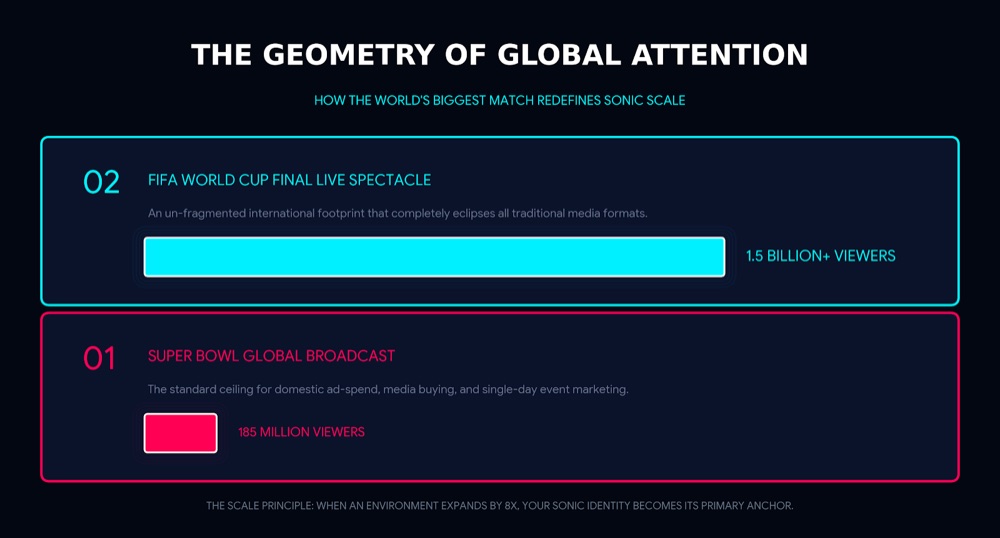
To understand this decision, you have to look at the numbers. For decades, the American Super Bowl halftime show has been the gold standard of entertainment marketing. Yet, even at its peak, it captures roughly 185 million global viewers.
FIFA’s inaugural halftime show operates on an entirely different scale. The global broadcast for this single match is projected to pass 1.5 billion live viewers. That means the World Cup stage commands an audience eight times larger than the global reach of the Super Bowl.
An audience of this size completely shifts the gravity of the music industry. With numbers this massive, the world’s biggest artists were undeniably competing fiercely behind the scenes just to be included in the 15-minute window, let alone get top billing.
When you are programming for a stadium of thousands on-site and billions watching at home, a single, localized musical style will inevitably alienate a huge portion of the room.
The curation team solves this through a smart mix of styles. By combining American pop heritage (Madonna), Latin crossover power (Shakira), K-pop's massive reach (BTS), and contemporary Afrobeats (Burna Boy), the stadium's sound becomes entirely borderless. Backed by the classical weight of Dudamel and the raw energy of the PS22 Chorus, the performance strips away cultural friction.
FIFA has recognized a basic truth that premium brands face every day: to hold the attention of a global audience, your sound cannot be an afterthought. It has to be an intentional expression of your core identity.
Curating for Victory
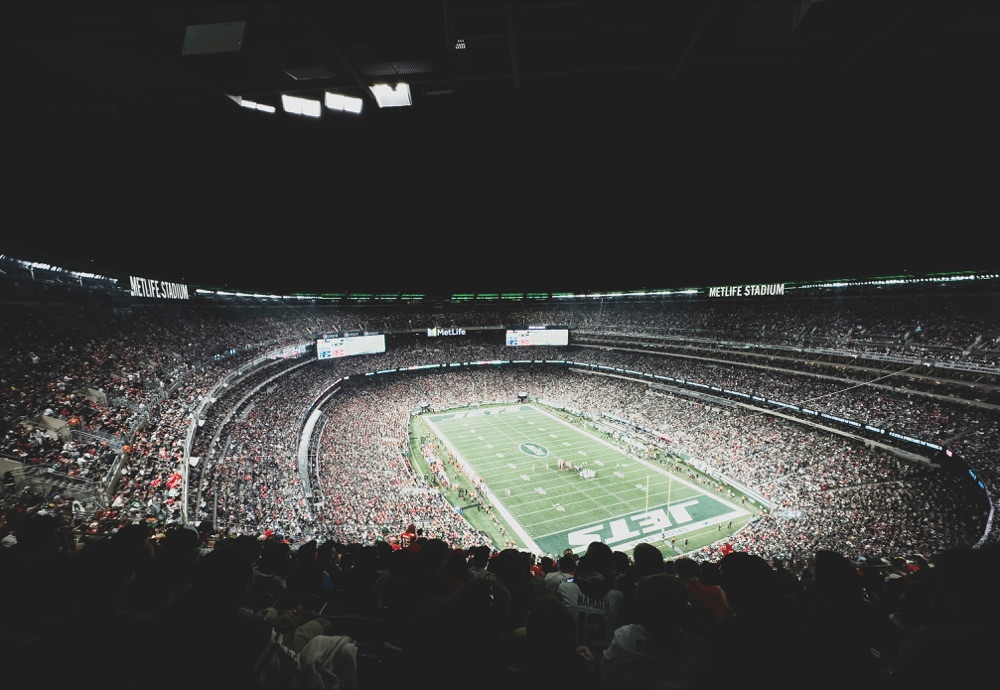
Ask any elite athlete, and they will tell you their pre-game soundtrack is a critical piece of their psychological preparation. Watch the crowds filling the concourse, and it is obvious that sports fans are, by default, music fans. The two worlds share the exact same raw energy: intense loyalty, emotional peaks, and a deep desire for a shared experience.
But when the whistle blows for halftime at a World Cup Final, the hierarchy changes. The performance cannot simply be a loud pop concert dropped onto the grass to distract people during a break. The focus has to shift completely: the music must support, frame, and elevate the gravity of the Game itself.
This requires a highly sophisticated curation strategy. To match the physical peak of the world's greatest players and the emotional weight of a global final, the soundtrack has to feel alluring, powerful, victorious, and dominant. It needs to sound like an achievement. Yet, if you lean too hard into predictable stadium clichés, the moment immediately feels cheap, obvious, and patronizing to a hyper-perceptive crowd. If the selection is too niche, you alienate half the globe.
This delicate balance is precisely why the selection of the curator was just as critical as the lineup itself. Bringing in an artistic anchor to guide the event ensures that the transition between massive global forces, from Madonna’s pop heritage to Burna Boy’s contemporary weight, feels like an intentional, continuous progression rather than a jarring playlist shuffle. The curator's job is to build the framework that holds these distinct genres together, ensuring the music honors the drama on the pitch without ever talking down to the audience.
It proves an essential rule: the music elevator can always go up, and the environment can always handle more energy, as long as the strategy behind it is built to support the primary experience rather than compete with it.
The Curation Lesson for Enterprise Brands: If the world's most traditional sporting organization recognizes that a premium physical experience requires an intentional, human-curated audio strategy to avoid feeling obvious or alienating, then your spaces cannot afford to rely on generic, unmanaged playlists. Your music choices must command the room without exhausting your guests.
Curating for Collective Energy
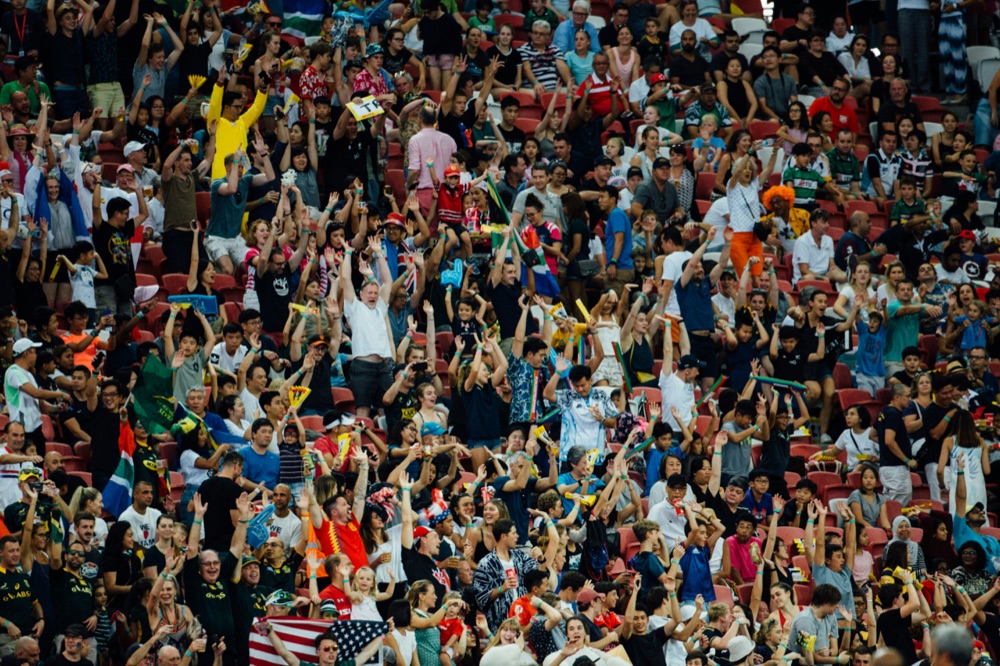
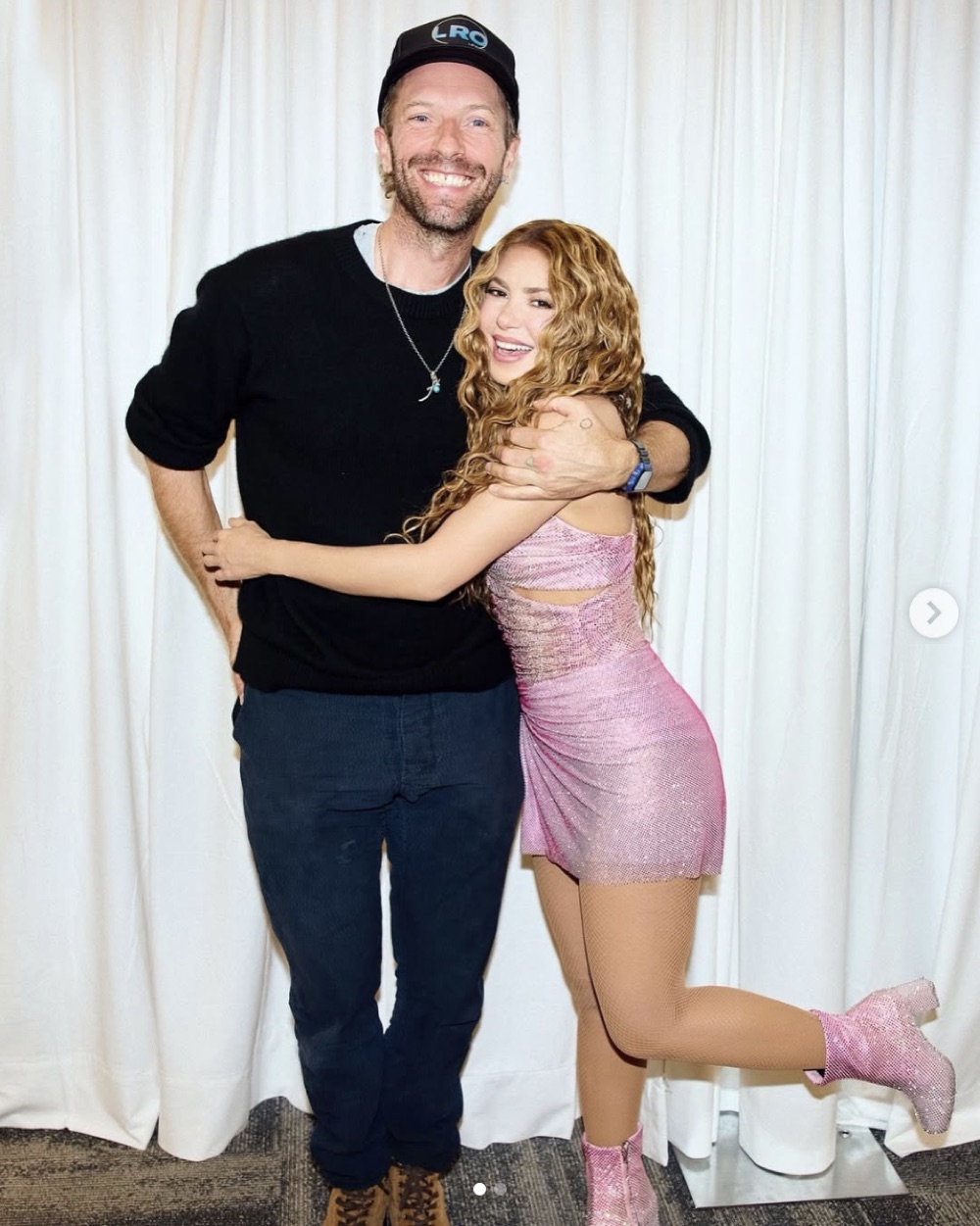
When Chris Martin announced the lineup, he noted the production was “all about togetherness.” That isn't just marketing copy; it is a practical framework for sound design.
Whether you are programming a global tournament stadium, a casual-luxury dining fleet, or a national network of flexible workspaces, the core goal is identical: you are using sound to build an environment where people want to stay, connect, and engage.
The lesson from the 2026 World Cup stage is clear: Don’t just let your environments be noisy. Build a dedicated sound architecture that turns an ordinary physical footprint into an unforgettable destination.
Connect Your Brand to the Energy
Visual elements define the scale of an event, but sound shapes how people actually feel inside it. When a physical space and its acoustic landscape align perfectly, it triggers a powerful, uninterrupted flow state that brings people together.
We built Curator out of a deep respect for authentic music culture, and we designed it for brand visionaries who want to inject that raw, unifying human energy directly into their spaces with absolute precision. Because whether you are programming for a global stadium or a premium boutique lounge, the goal remains the same: creating spaces where people feel connected.
You can hear the difference.
Find out more about Curator.