What’s Going On Here? Nostalgia-wave: How Gen X Music Became Gen Z’s New Obsession
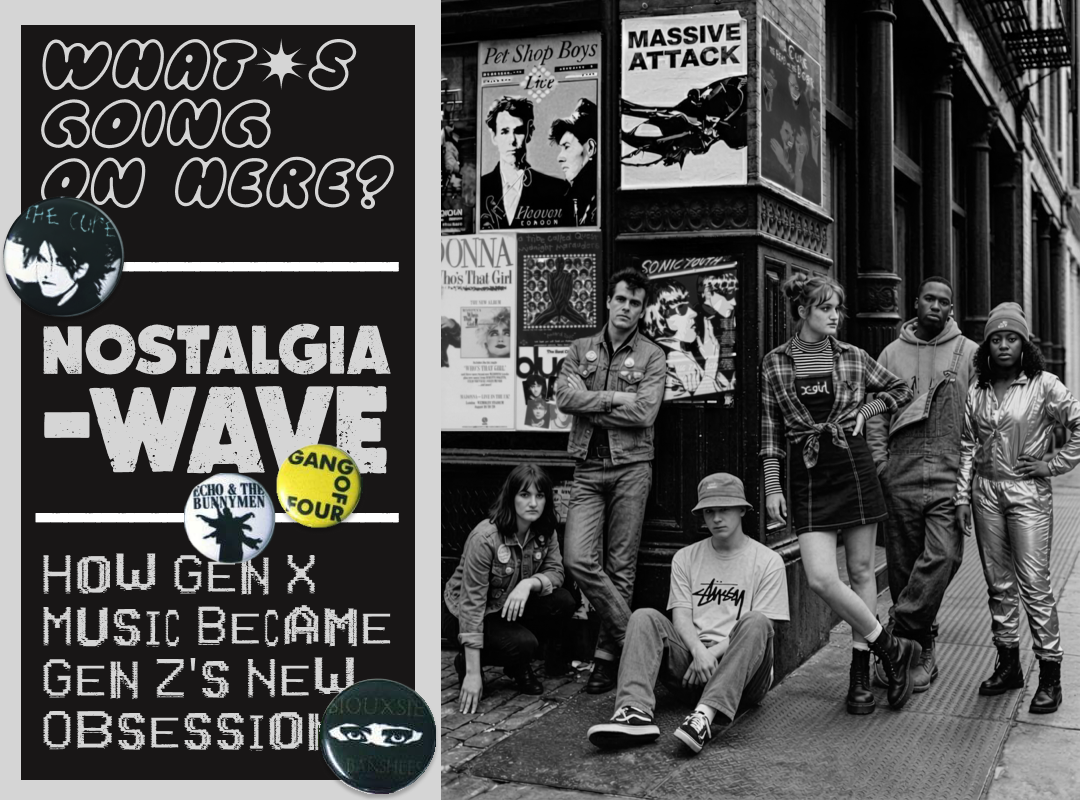
An authentic playbook for in-store music that works across generations. Where and whether Gen Z artists like Taylor Swift, MK.gee, Addison Rae, Clairo, and Bad Bunny feature in your in-store playlists is essential, but they’re only part of the equation. Gen X music might be the key.
The catalyst for this story did not come from a retail trend report or a marketing conference. It came from Spotify Wrapped.
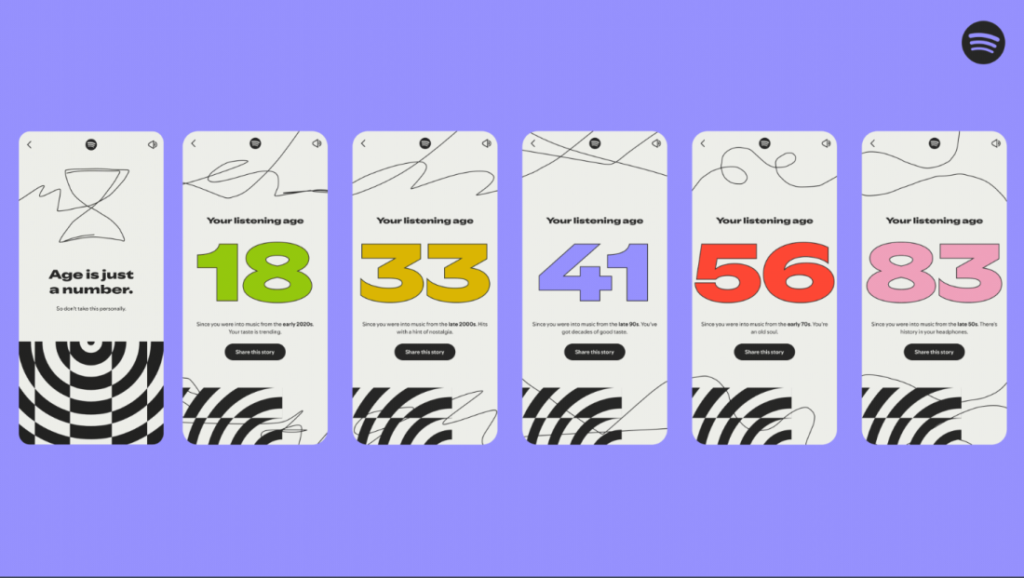
In its 2025 edition, Spotify introduced a feature called Listening Age. Instead of just listing top artists and minutes listened, it analyzed when the music you play was originally released and assigned you an age based on that era. The results were hilarious, unsettling, and instantly viral.
Charli xcx landed at a listening age of 75 because she listens heavily to late 60s music. Grimes clocked in at 92. Singer-songwriter Gracie Abrams landed at 14. Actor Louis Partridge, 22 in real life, posted his result of 100 with a confused “Uhh.” The youngest possible listening age was 16. The oldest was 100. The rarest listening age globally was 98, shared by just 0.0013 percent of users. The most common listening age was 21, with 9 percent of listeners landing there.
Within 24 hours, Wrapped generated more than 500 million social shares, a 41 percent increase over the previous year. Spotify’s SVP of marketing called Listening Age an early standout, the feature everyone talked about first.
What made it work was not precision targeting. It was emotional shock and recognition.
One Vanity Fair writer described their listening age of 59 as feeling “both like a microaggression and as if I am truly seen.” A writer at The Cut expected a listening age in their mid 30s and instead got hit with 73. TikTok filled with people calling themselves “unc” at 68 and wondering why every group chat suddenly felt like an assisted living facility.
Spotify did not try to target Gen X. Or Gen Z. Or Millennials.
They created a musical mirror that made everyone feel something strong enough to share.
That is where the real story starts.
The Paradox: Ignored Gen X, Obsessed Gen Z
At the very same moment Spotify was making hundreds of millions of people feel seen through their listening habits, Gen X was still saying they feel invisible to marketers.
This is the generation roughly between 45 and 60. They spend over $5,000 a year on shopping and travel. They are expected to inherit $1.4 trillion over the next decade. They are in their peak earning and spending years. Yet they still talk about being targeted with medical alert devices, retirement products, and messaging that assumes they are already checked out of cultural life.
Retailers often claim Gen X is “difficult to target” because their lives look so different. Some have small children. Some have kids in college. Some are single, some are divorced, some are on second careers, some are caregivers. The variability overwhelms traditional demographic segments.
Listening Age quietly exposed a deeper truth.
Spotify collapsed the problem of demographic complexity using one thing: music.
Whether you were sonically 17 or 78 and proud, you participated. You shared. You reacted. You became a voluntary marketer for Spotify.
Spotify solved the precise problem retailers say makes Gen X hard to reach. They created an experience so compelling that demographics stopped mattering.
And inside that viral chaos, something else surfaced.
Gen Z was proudly outing itself as sonically Gen X. Gen X music and even Baby Boomer music are thriving with the younger generations.
Why Gen Z Is Falling for Gen X Cultural DNA
Unlimited access, deeper discovery
Gen Z is the first generation with almost every recorded song available on demand. Previous generations were limited by radio playlists and the physical records they could afford. Gen Z types a mood or a word into a search bar and pulls up entire eras in seconds.
Spotify has reported that “sad” is one of the most searched words among Gen Z listeners. They look for music that feels emotionally rich, vulnerable, and sincere. Research shows they associate 90s and older music with comfort, escapism, and a sense of emotional honesty that often feels missing from life online.
This is not nostalgia. It is emotional alignment with music from a time they never lived through.
Parents’ collections and shared moments
A 2013 study found that young adults often form strong emotional attachments to the music their parents loved when they were teenagers. Gen Z is not discovering Gen X music only via recommendation algorithms. They are absorbing it in the car, in the kitchen, in the living room.
CD wallets in glove compartments. Vinyl on Sunday mornings. Parents putting on “their music” during dinner. Shared playlists on family accounts. These moments quietly wire Gen X music into Gen Z’s emotional memory before they even know the artists’ names.
TikTok as a revival machine
TikTok is the most powerful music revival machine we have ever seen. Songs from the 80s, 90s, and early 2000s race through short video at unbelievable speed. A 133-year-old song like “Daisy Bell” becomes a meme. A forgotten euro dance track becomes the backing audio for millions of aesthetic clips.
Modern Talking, Depeche Mode, Tears for Fears, and early electronic acts accumulate billions of views through edits that have nothing to do with their original context. A song resurfaces in a 10-second clip. It feels right. Users hunt down the full track, the album, the era.
This is the same cultural engine behind Listening Age. Music is being rediscovered through emotion and context, not chronology.
YouTube reactions: rediscovering magic in public
There is a whole universe of YouTube channels where Gen Z creators hear Gen X music for the first time. DayOne Reacts, The Charismatic Voice, Steph Gard, and Brad & Lex, to name a few. Millions of subscribers tune in to watch first-time listens of Nirvana, Radiohead, Smashing Pumpkins, Alice In Chains, The Cure, Depeche Mode, Queen, The Doors, and more.
These videos are not empty reaction bait. You see, creators stop mid-song to process a chord change, rewind a guitar solo, pull up the lyrics, and research a vocalist. Older viewers flood the comments with gratitude and disbelief that someone is feeling this for the first time.
For many people, it feels like the emotional twin of seeing a Listening Age that is decades older than their actual age. It is unsettling, affirming, and strangely hopeful all at once.
It is not just classic rock
Gen Z’s everyday listening sits inside Gen X’s sonic universe, but it is much broader than classic rock.
The Cure, Depeche Mode, New Order, Talking Heads, Tears for Fears, The Smiths.
Nirvana, Radiohead, Smashing Pumpkins, Soundgarden, Alice In Chains.
Massive Attack, Portishead, Moby, Björk.
A Tribe Called Quest, Nas, OutKast, Lauryn Hill, TLC, Mary J. Blige, Missy Elliott.
These artists shape mood playlists, late night listening, design studio sessions, study sessions, and wellness routines. Gen Z is not visiting this music as a museum. They are using it to live.
TV and film: locking the connection in
Film and television have become the emotional megaphones for this cross-generational connection.
Kate Bush’s “Running Up That Hill” is the signature example of the power of Gen X music. After its placement in Stranger Things Season 4, the song’s streams jumped more than 150 percent. It hit number one in eight countries and passed 1.5 billion total streams. Kate Bush became the oldest female artist ever to earn a new number one single in the UK.
Gen Z found her through emotional narrative, not historical context. TikTok, edits, cosplay, fan art, and reposted scenes turned a 1985 song into a present-tense phenomenon.
Read our post about “Running Up That Hill.”
Zoom out, and the 90s now function as one of Gen Z’s reference eras. Grunge silhouettes, trip hop atmospheres, analog textures, early electronic, and hip hop. When games, series, and brand films pull from that palette, younger audiences do not read it as retro. They read it as emotionally accurate.
Follow the money: private equity, data, and the new catalog gold rush
If this were only a cultural story, it would already be interesting. It is not only a cultural story.
Global private equity firms have spent the last several years buying the rights to legacy music catalogs at massive scale. They have poured billions into catalogs from artists like Fleetwood Mac, Queen, Red Hot Chili Peppers, Bruce Springsteen, and dozens of other Gen X music anchors.
They are not doing this out of nostalgia. They are doing it because the data says these catalogs behave like long-term, cash-generating assets with built-in upside.
Streaming provides a clear, multi-year view of how songs behave across age groups, countries, and contexts. Investors can see which tracks quietly keep earning, which spike after a sync, which combinations travel well in playlists, and which legacy artists suddenly resonate with younger listeners after a viral moment. They can model out how a catalog might perform if they secure a major placement or lean into social media moments.
Once these catalogs are acquired, the new owners do not just sit on them. They put them to work.
They pitch more aggressively for film, television, games, and brand campaigns. They optimize metadata, so songs surface properly in search and playlists. They support reissues, deluxe editions, remasters, and anniversary campaigns. They analyze where Gen Z is already engaging and push those songs harder into culture.
In other words, the people with the deepest access to the data are betting on the exact catalogs that Gen Z is discovering and that Gen X already loves. Private Equity is bullish on Gen X music.
For retailers, this is a gift. The cultural and financial validation has already happened. You do not have to guess whether Gen X-era music is still relevant or whether Gen Z will connect with it. Major capital has answered that question with real money.
The bandwagon is already rolling.
The question is whether your stores are on it.

Google Trends shows an uptick in searches for “Gen X music.”
The in-store opportunity
Here is what this means for anyone designing in-store music.
You do not have to pick a side.
The lesson of Listening Age is that when people feel deeply seen through their music preferences, they start doing the marketing for you. They share, talk, and invite others in.
When Gen Z proudly posts a listening age of 53, when they fall down reaction video rabbit holes of Radiohead and Nirvana, when Deftones or Portishead resurface in TikTok edits, they are telling you exactly what resonates.
When private equity firms and catalog companies invest billions into Gen X music catalogs and work around the clock to get those songs into series, games, social feeds, and campaigns, they are confirming the same thing in another language. The music keeps performing.
In physical retail, this opens up a powerful route.
Program Gen X music with intention, and you get:
- Gen X customers who hear the music that shaped them and feel seen, valued, and understood
- Gen Z customers who hear music they already consider deep, stylish, and credible, and who are open to discovering more
- A shared cultural vocabulary between generations, even if they arrived at it by totally different paths
Authenticity over algorithms: why curation still matters
There is one critical nuance.
Gen X is protective of its culture.
If you reduce their formative music to a “Best of the 80s and 90s” loop, it will not feel like a tribute. It will feel like their entire era has been moved to the oldies section.
Gen Z also has no particular loyalty to the big radio songs. They did not grow up with those tracks drilled into their heads. For them, discovery and context matter more than sing-along familiarity.
That is where curation comes in.
The Cure’s “Just Like Heaven” has more than 660 million streams and is beloved for good reason. It is also completely saturated. For Gen X, it has been overexposed. For Gen Z, it already carries the weight of a certified “classic.”
“Hey You” from the same album has the same melodic charm and emotional lift, but sits around two million plays. For Gen Z, it feels like a fresh discovery. For Gen X, it can unlock a specific, half-forgotten feeling from the years when they wore that record out. The emotional impact is stronger precisely because it is not the default choice.
The recent “Return of the Durutti Column” reissue illustrates the same point. Among Gen X fans, “Sketch for Summer” is often considered the signature track. Yet it sits at around 23,000 plays, while three other songs from the album have surpassed one million. Data alone would suggest those deeper cuts are the bigger moments. Cultural memory says otherwise. I’ve owned this album for over 30 years, and when I saw that new listeners were taking an interest in the other tracks, I had to revisit the record to understand what drew them to those songs.
Then there are the new bands that bridge the gap. Nation of Language and Automatic both draw heavily from Gen X influences like OMD, The Flying Lizards, and lean post-punk. For Gen Z, they feel fresh and current. For Gen X, they feel like a continuation of a language they already speak.
Algorithms are good at surfacing what is already big.
They are not good at understanding what a particular generation considers sacred.
Curation lives in that space.
It allows Gen X to feel respected rather than ignored. It lets Gen Z feel like they are uncovering something interesting and personal rather than being handed a history lesson. It connects the dots between legacy catalogs, present-tense artists, and the emotional realities of people walking into your store today.
The simple truth
While retailers say they cannot figure out Gen X and pour budget into decoding Gen Z, Spotify quietly proved something more important.
The problem is not that generations are hard to reach.
The problem is that most experiences are not powerful enough to make people feel seen.
Gen X is not difficult to target. They are being targeted in shallow ways.
Gen Z is not impossible to understand. They are telling you who they are through their listening habits, their posts, their reaction videos, and even their Listening Age.
For brands willing to pay attention, in-store music is not just a pleasant extra. It is one of the strongest emotional connectors left in physical retail.
This is not about programming nostalgia. It is about presenting Gen X music with the same cultural respect and intentionality it earned the first time around, and inviting Gen Z into that space as co-owners rather than tourists.
This is not a classic rock story.
It is a Gen X cultural reactivation story, backed by both emotion and data.
The question is not whether Gen X music works for Gen Z.
They have already answered that.
The question is: are you listening?
Activaire specializes in curated in-store music experiences that create emotional connections across generations. Contact us to learn how the right music can transform your retail environment.
Music Licenses ✅
Awesome Music ✅
Let’s get curating!